TEATRO/THEATER

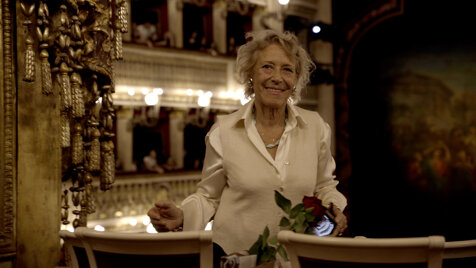
Stella Leonetti, allieva dei maestri del teatro Eduardo de Filippo e del premio Nobel Dario Fo, è co-fondatrice e co-direttrice del rinomato teatro “La Piccola Commenda” di Milano con Flavio Ambrosini.
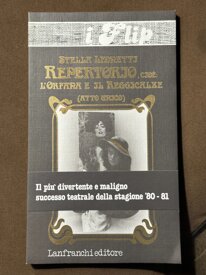
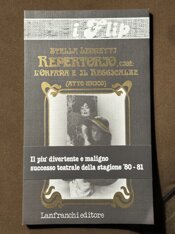
Ha debuttato con successo come autrice e regista nel 1980 nello spettacolo “Repertorio Cioè: L'orfana e il reggicalze” interpretato da Lella Costa e prodotto dalla compagnia “Le parole le cose ” di Lucia Poli, che ha prodotto anche il suo secondo spettacolo "Ahi, mamma!"
Seguono altre sei opere teatrali portate in tournée nelle principali città italiane. Alcune di queste sono state pubblicate, quattro in Europa, di cui una a Parigi e tre in Germania pubblicate da Fisher Verlag.
Ha lavorato come assistente alla regia scenica dell'opera per “La dama di picche” di Tchaikovsky al Teatro dell'Opera di Bologna, Regista F. Ambrosini, direttore musicale M° V. Delmann.
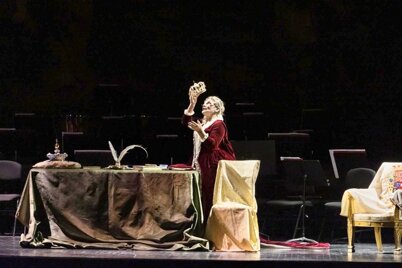
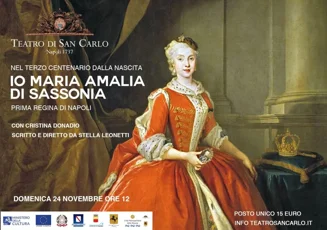
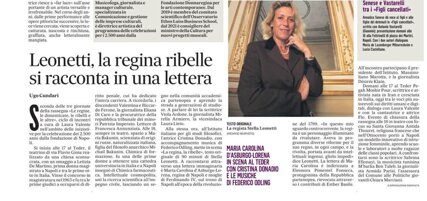
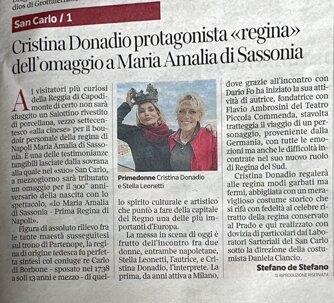
Nel 2024 ha scritto e diretto il monologo “Maria Amalia di Sassonia - Prima Regina di Napoli” al Teatro San Carlo, in tre recite, interpretato da Cristina Donadio.
Nel 2025 ha scritto il testo “Io, la Furiosa” sulla regina Maria Carolina Asburgo-Lorena-Borbone, reading di Cristina Donadio a Palazzo Serra, Napoli.
Leonetti’s artistic path was profoundly influenced by her studies under two of Italy’s greatest theater masters, Eduardo De Filippo and Dario Fo, the latter a Nobel Prize laureate in Literature. Their guidance shaped her approach to storytelling, characterized by social awareness, irony, and a deep sense of humanity.
She is co-founder and co-director of the renowned La Piccola Commenda Theatre in Milan, alongside Flavio Ambrosini. The theater became a significant center for contemporary dramaturgy and experimental performance. Leonetti made her debut as a playwright and director in 1980 with “Repertorio cioè: L’orfana e il reggicalze,” starring Lella Costa and produced by Lucia Poli’s company Le parole le cose. The play received critical acclaim for its originality and feminist insight. Encouraged by its success, she created another production, “Ahi, mamma!,” also produced by Le parole le cose, followed by six additional plays that toured major Italian cities.
Several of her theatrical works have been published internationally, including one in Paris and three in Germany by Fischer Verlag, confirming her status as a playwright with international recognition. Leonetti also contributed to opera, serving as assistant stage director for Tchaikovsky’s “La dama di picche” (The Queen of Spades) at the Teatro dell’Opera di Bologna, directed by Flavio Ambrosini with musical direction by Maestro Volker Delmann.
Alongside her artistic work, she has dedicated part of her career to education, teaching dramatic writing at the Scuola Europea di Design and at the Scuola del Piccolo Teatro di Milano, where she trained and inspired many young playwrights and screenwriters.
In 2024, Leonetti wrote and directed the monologue “Maria Amalia di Sassonia – Prima Regina di Napoli,” presented at the Teatro San Carlo, one of Europe’s oldest and most prestigious opera houses. The performance, starring Cristina Donadio, received excellent reviews and ran for three evenings.
In 2025, she wrote “Io, la Furiosa,” a dramatic text inspired by Queen Maria Carolina of Habsburg-Lorraine-Bourbon, also performed by Donadio at Palazzo Serra di Cassano in Naples. Through these recent works, Leonetti continues her exploration of women’s voices in history, reinterpreted with contemporary sensibility and poetic depth.
OPERE TEATRALI/THEATRICAL WORKS
.jpeg "whatsapp image 2025-10-03 at 17.13.00 (9).jpeg")
Io, Maria Amalia di Sassonia
Io, la Furiosa
I Gladiatori
%20edited.jpeg "whatsapp%20image%202025-10-03%20at%2017.13.00%20(7) edited.jpeg")
Transilvania, Transilvania
Metamorfosi
Un osceno soffio
.jpeg "whatsapp image 2025-10-03 at 17.13.00 (3).jpeg")
.jpeg "whatsapp image 2025-10-03 at 17.13.00 (1).jpeg")
Repertorio, cioè: l'orfana e il reggicalze
Ahi, mamma!
Diario notturno
IO, LA FURIOSA
Sinossi/Synopsis
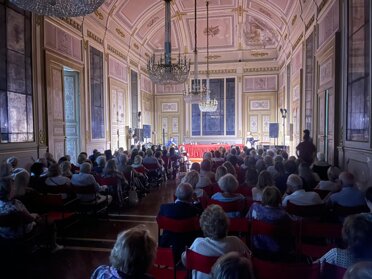
Maria Carolina d'Asburgo-Lorena-Borbone, regina di Napoli e moglie di Ferdinando IV, sul trono di Napoli all'epoca della rivoluzione del 1799, si racconta attraverso una lettera immaginaria indirizzata ad Eleonora Pimentel Fonseca, protagonista della Repubblica partenopea.
Maria Carolina of Habsburg-Lorraine-Bourbon, Queen of Naples and wife of Ferdinand IV, who was on the throne of Naples at the time of the 1799 revolution, tells her story in an imaginary letter addressed to Eleonora Pimentel Fonseca, a leading figure in the Neapolitan Republic.
Descrizione/Description
Testo originale di Stella Leonetti sulla regina Maria Carolina d'Asburgo-Lorena-Borbone, reading di Cristina Donadio a Palazzo Serra, Napoli, con musiche di Federico Odling.
Original text by Stella Leonetti on Queen Maria Carolina of Habsburg-Lorraine-Bourbon, read by Cristina Donadio at Palazzo Serra, Naples, with music by Federico Odling.
IO MARIA AMALIA DI SASSONIA, PRIMA REGINA DI NAPOLI
Sinossi/Synopsis
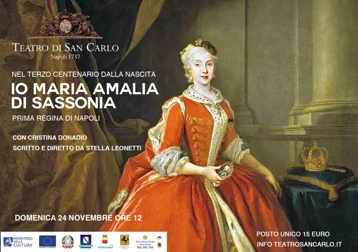
Nel monologo Maria Amalia torna al San Carlo: non ha dimenticato la sua città, l’entusiasmo per il suo Regno, e l’insperata fortuna di un marito adorato che ama intensamente tutta la vita. Lasceranno insieme quel diadema d’inestimabile valore che ancora impreziosisce e inorgoglisce Napoli, fatto di regge, istituzioni, e ritrovamenti archeologi.
In the monologue, Maria Amalia returns to the San Carlo: she has not forgotten her city, her enthusiasm for her kingdom, and the unexpected fortune of an adored husband whom she loves intensely throughout her life. Together, they will leave behind that priceless diadem that still embellishes and fills Naples with pride, made up of palaces, institutions, and archaeological finds.
Descrizione/Description
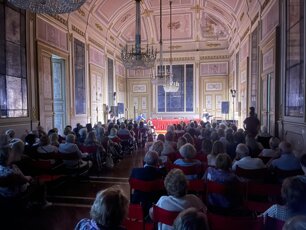
In occasione del trecentesimo anniversario della nascita di Maria Amalia di Sassonia, il Teatro di San Carlo di Napoli è lieto di presentare lo spettacolo teatrale “Io Maria Amalia di Sassonia - Prima Regina di Napoli", scritto e diretto da Stella Leonetti e interpretato da Cristina Donadio. L’appuntamento, in tre recite, è al Teatro di San Carlo, un luogo che da secoli rappresenta il cuore pulsante della cultura napoletana, per un omaggio a una sovrana che ha lasciato un'impronta indelebile nella storia della città.
To celebrate the 300th anniversary of the birth of Maria Amalia of Saxony, the Teatro di San Carlo in Naples is pleased to present the play “Io Maria Amalia di Sassonia - Prima Regina di Napoli” (I, Maria Amalia of Saxony - First Queen of Naples), written and directed by Stella Leonetti and starring Cristina Donadio. The three performances took place at the Teatro di San Carlo, a venue that has been at the heart of Neapolitan culture for centuries, paying tribute to a sovereign who left an indelible mark on the history of the city.
I GLADIATORI
.jpeg "whatsapp image 2025-10-03 at 17.13.00 (9).jpeg")
Sinossi/Synopsis
Al centro i problemi della famiglia attraverso le vicende di Annie e Francesco che si sono amati e si ritrovano dopo anni di separazione. Accanto a loro la figlia adolescente e Carlo, un giovane misterioso con cui Francesco ha una relazione omosessuale
The focus is on family issues through the story of Annie and Francesco, who loved each other and are reunited after years of separation. Alongside them are their teenage daughter and Carlo, a mysterious young man with whom Francesco has a homosexual relationship.
Descrizione/Description
Per Stella Leonetti, i gladiatori dei nostri giorni sono i membri di una stessa famiglia e, in particolare, sono individuabili nella coppia. Sia questa formata da marito e moglie che da persone che si amano o credono di amarsi. La Leonetti ha voluto esprimere il tema della figura femminile con tutti i suoi risvolti e soprattutto gli aspetti positivi e negativi della famiglia.
For Stella Leonetti, the gladiators of our times are members of the same family and, in particular, can be identified in couples. Whether these are made up of husband and wife or people who love each other or believe they love each other. Leonetti wanted to express the theme of the female figure with all its implications and, above all, the positive and negative aspects of the family.
“Stella Leonetti ha articolato uno spettacolo accattivante adatto allo spettatore intellettuale come quello che ama il teatro pieno di colpi di scena. I gladiatori si basa su una trama quasi da serial televisivo."
“Stella Leonetti has put together a captivating show that is suitable for intellectual viewers who love theatre full of twists and turns. Gladiators is based on a plot that is almost like a television series.”
- Il Giornale, 16 Marzo 1988
METAMORFOSI
Sinossi/Synopsis
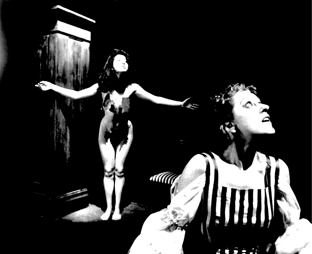
Una sedia si presenta al pubblico parlando di sé, delle sue colleghe e della sorella Mildred (una sedia vera e propria che le sta lì accanto), delle fatiche fisiche e morali, delle frustrazioni, dei sogni e anche delle prepotenze che deve sopportare una sedia nel corso della sua lunga o breve vita. Insomma una vita fatta di rapporti con una umanità spesso indifferente, un'umanità di sederi che si portano dietro una grande varietà di nevrosi, di tick e di manie.
A chair introduces itself to the audience, talking about itself, its colleagues and its sister Mildred (a real chair standing next to it), the physical and moral hardships, frustrations, dreams and even the bullying that a chair has to endure during its long or short life. In short, a life made up of relationships with an often indifferent humanity, a humanity of bottoms that carry with them a wide variety of neuroses, tics and obsessions.
Descrizione/Description
Nella prima parte del monologo, la mano dell’autrice e regista si mantiene leggera tra il comico e il grottesco accostandosi ad un teatro di tipo surreale, realizzato con semplicità. La sedia, nella seconda parte si trova di fronte alla sua, pur provvisoria, metamorfosi in donna nel corso di un sogno ambientato in un paradiso artificiale dai contorni umani. Dopo l’incubo, il ritorno alla condizione primaria naturale, quella di sedia pronta a morire perché, si dice nel testo, le sedie muoiono al 36º miliardo di parole umane ascoltate e l'ultima parola sarà inaspettata anche per lei.
In the first part of the monologue, the author and director's touch remains light, oscillating between comedy and the grotesque, approaching a surreal style of theatre, achieved with simplicity. In the second part, the chair faces its temporary metamorphosis into a woman during a dream set in an artificial paradise with human contours. After the nightmare, it returns to its primary natural condition, that of a chair ready to die because, as the text says, chairs die after hearing 36 billion human words, and the last word will be unexpected even for her.
“Stella Leonetti eleggendo a protagonista del suo lavoro una sedia in metamorfosi ha costruito un paradosso sulla donna o meglio sull’attrice-donna, un leggero paradosso sul teatro e sull’attore e le sue possibilità di identità e di trasformazione. Il lavoro si presenta quasi come un apologo sull’inquietudine, sulle difficoltà di aderire anima e corpo alla propria condizione. "
“By choosing a chair undergoing metamorphosis as the protagonist of her work, Stella Leonetti has constructed a paradox about women, or rather about female actresses, a slight paradox about theatre and actors and their possibilities for identity and transformation.The work presents itself almost as an allegory about restlessness, about the difficulties of adhering heart and soul to one's own condition.”
- L'Unità, 18 Ottobre 1986
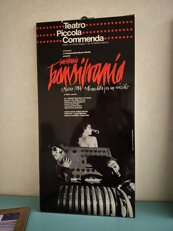
TRANSILVANIA, TRANSILVANIA
Sinossi/Synopsis
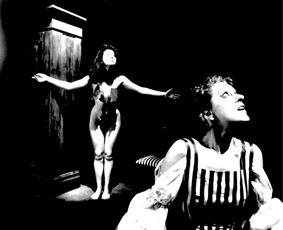
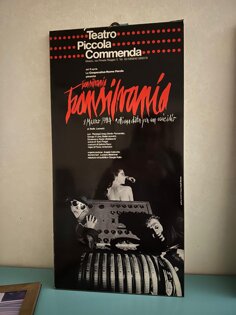
Un prologo ci informa attraverso cupe immagini “Transilvaniche” che la razza-attore sta per scomparire perseguitata da una pestilenza, nonché da Stato, burocrazia, critici idioti. Un accanimento storico costringe gli attori a vivere rinchiusi in un vampiresco castello in piena Transilvania, tra mille stenti. Tra questi un gruppo di “spettacolanti sciolti” cerca di reagire al tutto tentando disperatamente di mettere su uno spettacolo, tra ironia e autoironia. Da qui si avvia la storia vera, non più allegorica, delle vere vicissitudini di attori alla ricerca forzata di autori di una “nuova drammaturgia”. Ma mancano i personaggi, mancano i fondi e mancano anche le idee.
A prologue informs us through gloomy ‘Transylvanian’ images that the actor race is about to disappear, persecuted by a plague, as well as by the state, bureaucracy and idiotic critics. Historical persecution forces actors to live locked up in a vampire-like castle in the heart of Transylvania, amid a thousand hardships. Among them, a group of “loose performers” tries to react to it all by desperately attempting to put on a show, with irony and self-irony. From here begins the true story, no longer allegorical, of the real vicissitudes of actors forced to search for authors of a “new dramaturgy”. But there are no characters, no funds and no ideas.
Descrizione/Description
Transylvania Transylvania, che reca nel sottotitolo “8 marzo 1984, ottima data per un suicidio”, non è che una metafora. Per vampiro si intende il teatro che succhia energie e sforzi e uccide sogni generosi. La Leonetti finge proprio che sia la stessa compagnia “Nuove Parole” a finire per disperazione in una Transilvania di fantasia, cercando di mettere in scena uno spettacolo di vero successo e che al contrario si impantana in una sequela di situazioni paradossali.
Transylvania Transylvania, which bears the subtitle “8 March 1984, an excellent date for suicide”, is nothing more than a metaphor. The vampire refers to the theatre that sucks energy and effort and kills generous dreams. Leonetti pretends that it is the “Nuove Parole” theatre company itself that ends up in despair in a fictional Transylvania, trying to stage a truly successful show but instead getting bogged down in a series of paradoxical situations.
“La Leonetti firma uno spettacolo moderno e tutto sommato diverso dai molti che, come fantasmi, si aggirano sui tanti nostri palcoscenici grandi o minori."
“Leonetti has created a modern show that is, all things considered, quite different from the many others that, like ghosts, haunt our numerous stages, large and small.”
- Avvenire, 18 Aprile 1985
UN OSCENO SOFFIO
%20edited.jpeg "whatsapp%20image%202025-10-03%20at%2017.13.00%20(7) edited.jpeg")
Sinossi/Synopsis
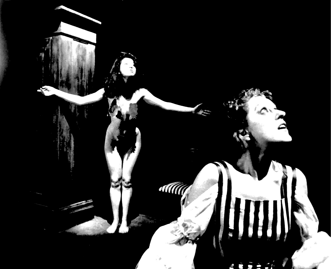
Osceno soffio è il racconto affannato e folle di una giovane donna che ha ucciso l'uomo amato dopo averlo evirato una volta tornato a casa da un amplesso omosessuale.
Osceno soffio is the frantic and crazy story of a young woman who killed the man she loved after castrating him when he returned home from a homosexual encounter.
Descrizione/Description
Osceno soffio è un monologo scritto da Stella Leonetti, messo in scena dalla Cooperativa Nuove Parole con la regia di Flavio Ambrosini.
L'ironia presente nelle opere precedenti di Stella Leonetti viene sostituita dal dramma dell'esistenza della morte di un eventuale aldilà, con un linguaggio duro, privo di barriere morali, contraddittorio e provocatorio.
Osceno soffio is a monologue written by Stella Leonetti, staged by Cooperativa Nuove Parole and directed by Flavio Ambrosini.
The irony present in Stella Leonetti's previous works is replaced by the drama of existence and death in a possible afterlife, with harsh language that is devoid of moral barriers, contradictory and provocative.
“Scritto in tempo record (una settimana) da Stella Leonetti, Osceno soffio è un testo che ha principalmente l’intento di stimolare ad una profonda riflessione. Un testo che si assume la pesante responsabilità di affrontare due temi fondamentali dell'esistenza umana, l'amore ed un sentimento altrettanto potente: la rabbia"
“Written in record time (one week) by Stella Leonetti, Osceno soffio is a text that aims primarily to stimulate deep reflection. It is a text which takes on the heavy responsibility of addressing two fundamental themes of human existence: love and an equally powerful emotion, anger.”
- Il Giornale, 19 Gennaio 1985
DIARIO NOTTURNO
.jpeg "whatsapp image 2025-10-03 at 17.13.00 (1).jpeg")
Sinossi/Synopsis
Una coppia di notte sul letto. Si amano, litigano, si parlano, si moltiplicano. Prima Odisseo e Penelope, Faust e Margherita, Giuseppe e Maria, poi addirittura insetti o fiori. Ma sempre una coppia che racconta, sogna e delira su di sé. Questo incessante discorso a due è il tema di Diario Notturno o Azzurro Candito.
A couple at night on their bed. They love each other, they argue, they talk, they multiply. First Odysseus and Penelope, Faust and Marguerite, Joseph and Mary, then even insects or flowers. But always a couple who talk, dream and rave about themselves. This incessant dialogue between two people is the theme of Notte di diario (Night Diary) or Azzurro Candito (Candied Blue).
Descrizione/Description
Un testo scritto, interpretato e diretto da Stella Leonetti, in scena alla Piccola Commenda. Si tratta di un'avventura mentale che si svolge in una notte immaginaria tra due persone. Fondamentale per questa coppia è un bisogno di comunicazione. Sette volte in tutto, sette coppie e sette quadri che con il prologo e l'epilogo formano lo spettacolo.
A play written, performed and directed by Stella Leonetti, staged at the Piccola Commenda theatre. It is a mental adventure that takes place in an imaginary night between two people. Fundamental to this couple is a need for communication. Seven times in total, seven couples and seven tableaux which, together with the prologue and epilogue, make up the show.
“Si parla tanto di nuova drammaturgia in questi tempi ed ecco finalmente uno spettacolo teatrale che ha tutte le carte in regola per essere catalogato in questo genere: Diario Notturno o Azzurro Candito, scritto da Stella Leonetti, trentenne, già autrice di due testi teatrali che hanno raccolto entusiastiche adesioni.”
“There is a lot of talk about new dramaturgy these days, and here is finally a play that has all the cards to be classified in this genre: Diario Notturno o Azzurro Candito, written by Stella Leonetti, a thirty-year-old author of two plays that have been enthusiastically received.”
- La Repubblica, 4 Febbraio 1983
AHI, MAMMA!
.jpeg "whatsapp image 2025-10-03 at 17.13.00 (3).jpeg")
Sinossi/Synopsis
Una ragazza torna a casa sua nel Sud. Qui trova la madre che le confessa, non senza qualche resistenza, di essere innamorata del suo cameriere (fannullone) giamaicano. Inutili gli appelli alla ragione o al razzismo, restano senza esito anche le pressioni di una zia impicciona perché la madre sciolga la sua vedovanza con un decoroso direttore di banca. Ma quando il cameriere comprende di essere finalmente diventato un miliardario, per un'eredità lungamente attesa, ed esplode la sua vera natura tutt'altro che svagata, la madre cambia idea con disperazione della figlia.
A young woman returns to her home in the South. There she finds her mother, who confesses, not without some resistance, that she is in love with her Jamaican waiter (a lazybones). Appeals to reason or racism are useless, and even pressure from a meddlesome aunt for her mother to end her widowhood with a respectable bank manager is unsuccessful. But when the waiter realises that he has finally become a millionaire, thanks to a long-awaited inheritance, and his true nature, which is anything but idle, explodes, her mother changes her mind, much to her daughter's despair.
Descrizione/Description
Lo spettacolo che si qualifica farsa reggae, segue le vicende di una figlia, Lella Costa, una madre, la stessa Leonetti, una vecchia zia caricaturale, Giorgia O’Brien, e un cameriere giamaicano Giovanni Calò. Lo spettacolo si avvale di musiche e canzoni scritte da Gaetano Liguori, apposta per ogni personaggio, utilizzando persino le parole dei proverbi per raggiungere l'effetto comico.
The play, which can be described as a reggae farce, follows the story of a daughter, Lella Costa, a mother, Leonetti herself, a caricatured old aunt, Giorgia O'Brien, and a Jamaican waiter, Giovanni Calò. The play features music and songs written by Gaetano Liguori specifically for each character, even using the words of proverbs to achieve a comic effect.
“Stella Leonetti, nella triplice veste di interprete, regista e commediografa, presenta una novità italiana. Ahi, Mamma!, in un panorama che troppo spesso si rifugia in Pirandello, Goldoni e Molière costituisce un indubbio titolo di merito.”
“Stella Leonetti, in her triple role as actress, director and comediographer, presents an Italian innovation. Ahi, Mamma!, in a landscape that too often takes refuge in Pirandello, Goldoni and Molière, is undoubtedly a title of merit.”
- Stampa Sera, 23 Marzo 1982
REPERTORIO, CIOÈ: L'ORFANA E IL REGGICALZE
Sinossi/Synopsis
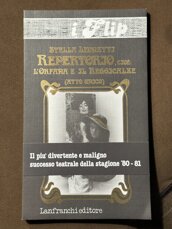
Teresa ratti è una giornalista precaria, piena di uomini, libri e solitudine. Attraverso una serie di riflessioni Teresa snocciola con tenera perfidia il suo privato, popolato da una fitta schiera d'ombre d’uomini. L'ironia viene così individuata come arma tra le più feroci che una donna possa impugnare.
Teresa Ratti is a precarious journalist, surrounded by men, books and loneliness. Through a series of reflections, Teresa tenderly and maliciously reveals her private life, populated by male shadows. Irony is thus identified as one of the most ferocious weapons a woman can wield.
Descrizione/Description
Repertorio, cioè: l’Orfana e il reggicalze è l'opera prima con cui una giovane giornalista, Stella Leonetti, esordisce come autrice e regista con la compagnia “Le parole, le cose” diretta da Lucia Poli. Repertorio, interpretato da Lella Costa, è uno sfogo post femminismo, post ’68, post speranza di poter cambiare il mondo con l'impegno individuale. Teresa Ratti è un'orfana che cerca confusamente qualcosa a cui aggrapparsi.
Repertorio, cioè: l'Orfana e il reggicalze is the first play by young journalist Stella Leonetti, who makes her debut as a writer and director with the theatre company Le parole, le cose, directed by Lucia Poli. Repertorio, starring Lella Costa, is a post-feminist, post-1968 outburst, post-hope of being able to change the world through individual commitment. Teresa Ratti is an orphan who is confusedly searching for something to hold on to.
“Il testo, con i suoi spunti autobiografici e la dinamica lucidità che lo contraddistingue, è un lavoro fresco e interessante e lascia ben sperare in una successiva evoluzione drammaturgica della giovane scrittrice.”
“The text, with its autobiographical references and distinctive lucidity, is a fresh and interesting work that bodes well for the young writer's future dramatic development.”
- Il Mattino, 24 Aprile 1981